Timeline
| August 1, 2026 | Deadline for proposing a presentation. Follow the guidance below to submit a draft presentation or a detailed description. Later submissions will be considered at lower priority. |
|---|---|
| August 2026 | Decisions announced. In-person presenters are scheduled. |
| September 2026 | Final slides due for virtual presenters. |
Topics
Every presentation should relate to STAMP. Beyond that, topics are open.
Special emphasis this year
- Cost to apply STPA or CAST
- Time required to complete STPA or CAST
- Introducing STAMP, STPA, and CAST into organizations
- Return on investment, resources required, learnability, and other practical details
- The technical, operational, financial, social, or cultural impact you've had with these approaches
- Contract language or supplier requirements for STPA
- Evaluations and comparative studies with other approaches
- Effective oversight and quality control of STPA work
- Prioritizing STPA and CAST results
Other possible topics
- Experience using STPA, STPA-Sec, and CAST
- Safety-guided and security-guided design using STPA and STPA-Sec
- Using STPA to make decisions
- Accident and loss analyses
- War stories: something that went wrong in your organization, such as an outage investigated with CAST or a troubled project where STPA was brought in, and what you learned
- Regulatory, certification, and licensing decisions
- Evaluations and comparisons with traditional methods
- Risk management and leading indicators
- Security and other areas, such as workplace safety
- Developing and evaluating safety management systems (SMS)
- Tools, processes, and other support for STPA and CAST
- Management and adoption experience and challenges
- Emergent properties beyond safety and security
- Unusual applications, important problems, or new areas
The in-person workshop is not recorded or streamed, so presenters can speak openly about mistakes, near misses, and other details they couldn't share in a public recording. Virtual talks are streamed live, and a recording is posted only if the speaker agrees.
As in previous years, the workshop gives priority to industry applications and practical experience. More theoretical and academic proposals are better suited to other venues.
Past presenters have come from industry, government, and universities, working in aviation, automotive, internet services, space systems, medical devices, healthcare, oil and gas, rail, chemicals, human factors, robotics, security, defense, workplace safety, and other fields.
What to include
Your proposal should explain:
- The topic or problem you studied
- How you went about solving it
- Examples of the work, such as a control structure or unsafe control actions
- Insights and conclusions that show the value of the work
- The "aha" moments from your work
The presentation guidance has more advice on what makes a strong talk.
Avoid common technical mistakes
Before you submit, check your work against:
If your presentation involves STPA, review the guidelines in the STPA Handbook. If it involves CAST, review the CAST Handbook.
New methods and modifications
Most accepted presentations use the standard steps of STPA or CAST.
If you are proposing changes to the steps, assess the benefits and drawbacks first. Reviewers expect new, unproven approaches to be tested carefully, including their advantages and disadvantages. Most participants are industry professionals looking for practical solutions they can use now. Well-tested method improvements are welcome, but the bar may be higher than at venues with an academic focus.
Review criteria
Reviewers accept or reject proposals based on these criteria:
- The topic is relevant and of interest to the STAMP community
- Most of the content is about STAMP-based approaches, such as STPA and CAST
- The work avoids the common mistakes in STAMP, STPA, and CAST
- STPA work follows the criteria in the STPA Handbook
- CAST work follows the criteria in the CAST Handbook
- It describes in detail what was done and the findings and insights it produced
- Where applicable, it shows examples of the losses, hazards, control structure, unsafe control actions, process models or mental models, scenarios, or contextual factors, so reviewers can judge the quality of the work
- The conclusions state the value and impact of the work clearly
Format
Submit either a document or rough draft slides. If you send slides, add slide notes or text wherever reviewers would otherwise miss a point. The proposal doesn't need to be polished or complete, but it has to be understandable and give reviewers enough to judge what was done, how it relates to the workshop, and its overall quality.
Submissions must be in English, including all tables and figures.
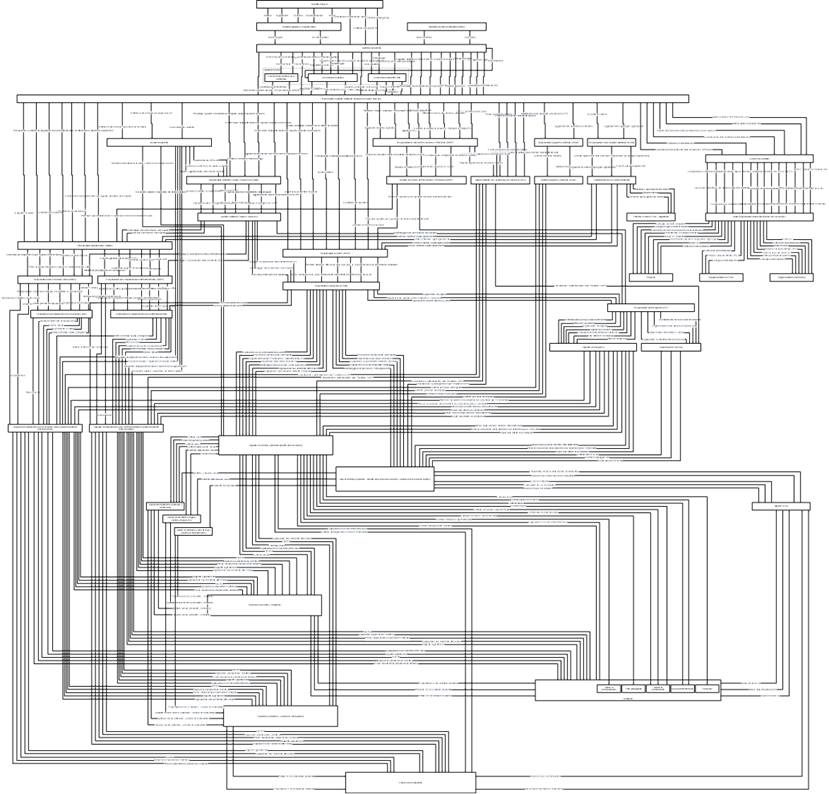
Readability
Make sure every figure can be read. If reviewers can't read your figures, they can't evaluate the work. Here is a figure from a rejected submission:
Examples of past proposals
- Accepted submission 1: Managing technical project risks using STPA (PDF)
- Accepted submission 2: The role of the STAMP model in the emergence of AI perils (PDF)
Submit your proposal
Submission link blocked or not working? Send it by email
Email the following to jthomas4@mit.edu (John Thomas, program chair of the 2026 MIT STAMP Workshop), with your draft attached:
- Subject: "Request: 2026 MIT STAMP Workshop Abstract Submission"
- Abstract title
- Primary contact for the abstract: first name, last name, and email address
- A line such as "Please see the attached draft presentation for consideration in the 2026 MIT STAMP Workshop."