The faculty, research staff, and students who make up PSAS, and how the partnership is organized.
Leadership
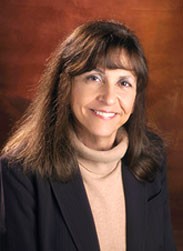
Professor Nancy Leveson
Director of PSAS
Nancy Leveson is Professor of Aeronautics and Astronautics at MIT and an elected member of the National Academy of Engineering. Her research covers system safety, software safety, software and systems engineering, and human-computer interaction. She received the AIAA Information Systems Award in 1995 for "developing the field of software safety and for promoting responsible software and system engineering practices where life and property are at stake," the ACM Allen Newell Award for outstanding computer science research in 1999, and the ACM SIGSOFT Outstanding Research Award in 2005.
In the early 2000s she created STAMP, the accident causality model that STPA and CAST are built on, and laid it out in her 2004 paper A New Accident Model for Engineering Safer Systems. She has published more than 200 research papers. Her books include Safeware: System Safety and Computers (Addison-Wesley, 1995), Engineering a Safer World (MIT Press, 2012), and An Introduction to System Safety Engineering (MIT Press).
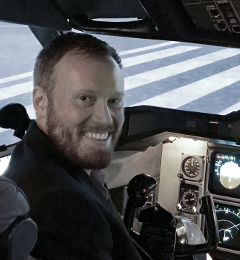
Dr. Thomas has a background in CS, EE, Computer Engineering, and Systems Engineering and spent a number of years in industry working for aerospace, automotive, and defense companies. He holds a Ph.D. in Engineering Systems and he now works as a member of the aeronautics and astronautics department at MIT. His research is focused on developing STAMP-based methods. His work includes creating structured processes for analyzing complex automated and human-intensive systems, especially systems that may behave in unanticipated, unsafe, or otherwise undesirable ways through complex interactions with each other and their environment. By using control theory and systems theory, more efficient and effective design and analysis processes can be created to prevent flaws that lead to unsafe or unexpected behaviors when integrated with other systems. More recently he has been applying these techniques to automated systems that are heavily dependent on human interactions and may not only experience human error but may inadvertently induce human error through mode confusion, clumsy automation, and other mechanisms that can be difficult to anticipate.
Dr. Thomas's work also includes defining a formal structure underlying a systems-theoretic process that can be used to help ensure potentially hazardous or undesirable behaviors are systematically identified. He has developed algorithms to automatically generate formal executable and model-based requirements for software components as well as methods to detect flaws in a set of existing requirements. The same process can be applied to both safety and functional goals of the system, thereby permitting the automated detection of conflicts between safety and other requirements during early system development.
Dr. Thomas has taught classes on software engineering, cybersecurity, system safety, system engineering, human-centered design, and related topics.
Professor John Carroll, MIT Sloan School of Management and Engineering Systems
Dr. Stan Finkelstein, MIT Engineering Systems and Harvard Medical School
Students
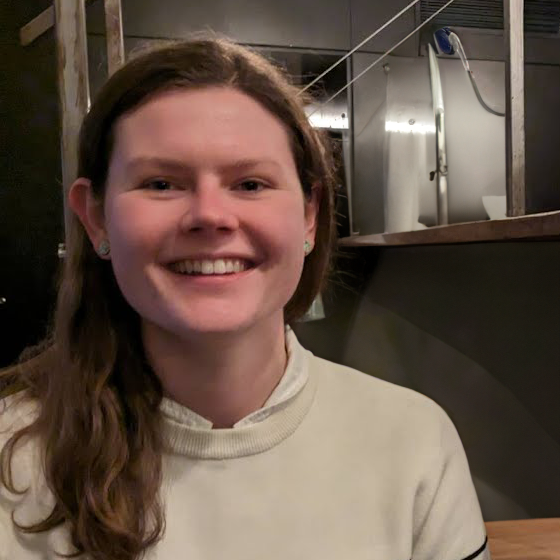
Polly Harrington
Graduate student, Engineering Systems Laboratory
Polly Harrington is a graduate student in MIT's Engineering Systems Laboratory. She received a B.S. in Engineering Psychology from Tufts in 2021. Her research uses human factors techniques to strengthen safety analysis of complex sociotechnical systems.
Eugenia Kim
Master's candidate, System Design and Management
Eugenia Kim is an Engineering and Management master's candidate at MIT and a fellow in the System Design and Management program. Her research applies STPA to health information systems. She has worked in business operations, product management, and systems analysis in developer relations, emerging technology incubation, and health informatics. She holds an M.S. in Health Informatics from Weill Cornell Graduate School of Medical Sciences and a bachelor's degree in Biological Sciences from Cornell University.
Marianne Vanhala
Visiting graduate student, University of Oulu
Marianne Vanhala is visiting MIT's Engineering Systems Laboratory to work on her master's thesis, with additional guidance from Professor Nancy Leveson. She is a graduate student in Machine Design at the University of Oulu in Finland, where she earned a B.S. in Mechanical Engineering in 2023. Her research looks at improving safety and the use of automation in human-machine systems, starting early in design.
PSAS brings MIT researchers together with the industry practitioners who design and operate complex systems. Every project starts from a real problem that practitioners face, never a simplified toy problem or a purely theoretical one, and we work on it with them, so the solutions we produce are useful and effective in industry right away. Our partners work in aviation, spacecraft, healthcare, automotive, chemical processing, oil and gas, nuclear power, and other industries.
Organizations outside MIT work with PSAS in four ways, from sharing information to sponsoring research.
Research partner
Sponsor research on problems your organization faces and work closely with PSAS researchers on it. Research partners also host graduate student internships and take part in information sharing.
Supporting member
Share information with PSAS and tell us about the safety challenges your organization faces. Those challenges help inform the research PSAS pursues. Members hear about PSAS's work and ongoing research on those challenges, and can work with PSAS on existing projects.
Safety exchange
Exchange information and lessons with PSAS and other organizations working on similar problems, without a research commitment.
Affiliated universities and stakeholders
Join a network of universities and other organizations interested in applying systems thinking to safety.
In this section
Interested in collaborating with PSAS?
We work with industry, government, and universities on real safety and security problems.